DISCOVER THE MUNDARI PEOPLE OF SOUTH SUDAN
South Sudan is home to diverse communities whose traditions are closely connected to their history, environment and livelihoods. Among them are the Mundari people, an ethnic community known for their strong relationship with cattle.
Living mainly around Terekeka, north of Juba, the Mundari have a pastoral heritage shaped by cattle keeping, family relationships and the surrounding landscape near the White Nile.
A visit to a Mundari cattle camp offers travelers an opportunity to experience a living culture, learn about traditional practices and gain a deeper understanding of South Sudan beyond its capital city.
At Juba Tours, we believe that meaningful travel begins with discovering the people and traditions that make a destination unique.
1. Who Are the Mundari People?
The Mundari, also known as the Mandari, are an ethnic community whose traditional homeland is centred around Terekeka in Central Equatoria, South Sudan.
Their livelihoods have traditionally involved cattle keeping, farming and other activities influenced by the seasons and natural environment. Their culture includes oral traditions, music, dance, community relationships and knowledge passed from one generation to another.
Although cattle are central to their identity, Mundari culture extends far beyond livestock. It reflects a rich social heritage that continues to evolve alongside modern life.
2. Why Are Cattle So Important to the Mundari?
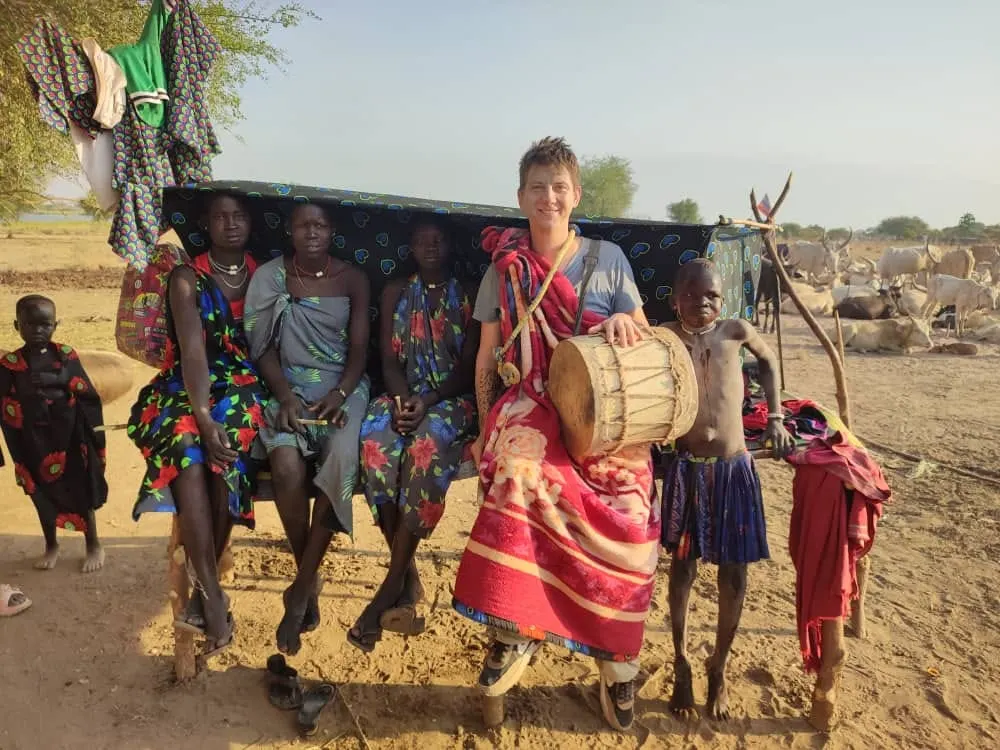
Cattle are much more than livestock to the Mundari. They can represent wealth, family heritage, social standing, livelihood and cultural identity.
They provide milk and other valuable resources and play important roles in family relationships, marriage arrangements and community life. Caring for cattle requires considerable knowledge of animal behavior, grazing conditions and water availability.
For many families, a herd represents years of work and a connection between generations. Understanding this relationship helps visitors appreciate why cattle receive such attention and respect within the community.
3. The Famous Long-Horned Cattle
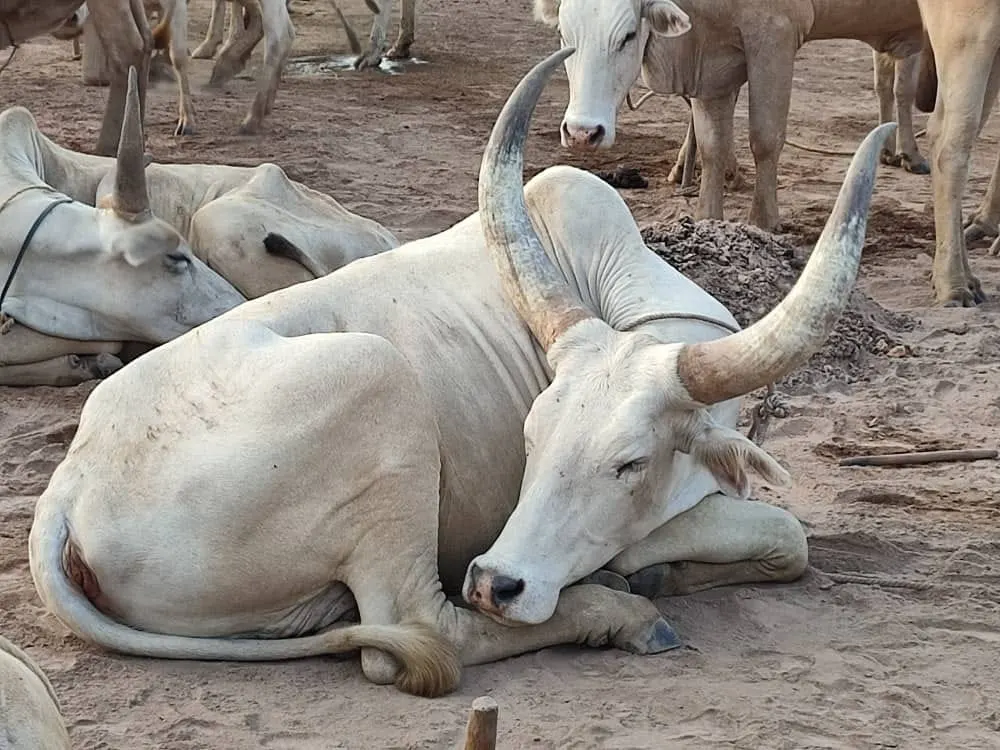
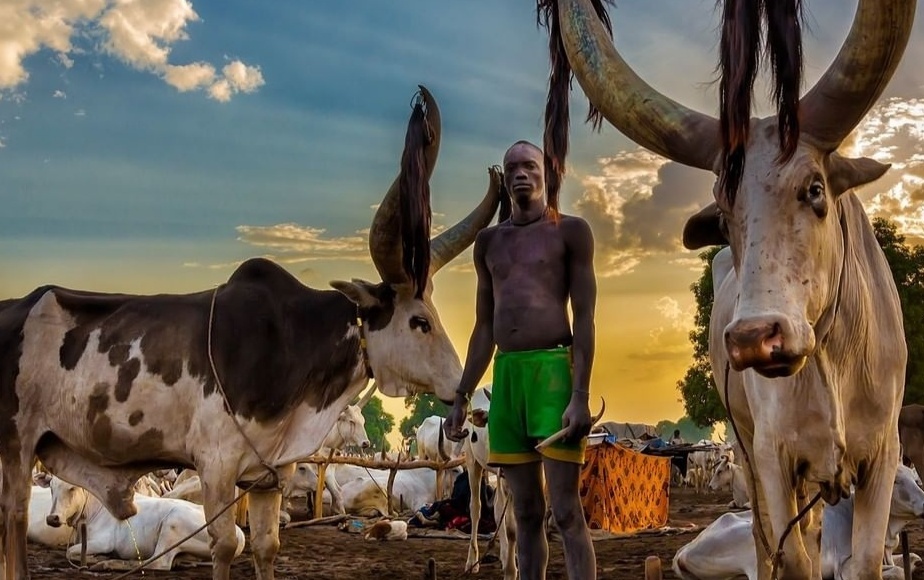
One of the most striking features of Mundari cattle camps is the presence of long-horned cattle, including animals associated with the Ankole-Watusi type.
Their impressive horns, varied colors and distinctive appearance create memorable scenes against the South Sudanese landscape.
However, these animals are more than beautiful subjects for photography. They are part of the community’s livelihood, heritage and everyday responsibilities.
Visitors may observe herders caring for their animals, guiding them through the camp and managing daily routines according to the needs of the herd.
4. Life Inside a Mundari Cattle Camp
A Mundari cattle camp is a living community rather than a conventional tourist attraction. Daily activities revolve around the care of cattle and the responsibilities of family and community life.
Depending on the camp and season, visitors may observe:
- Cattle herding and animal care.
- Milk-related household activities.
- Camp maintenance and daily routines.
- Social gatherings and the sharing of traditional knowledge.
- Interactions between people and their animals.
The atmosphere is shaped by the sounds of cattle, the movement of herds and the surrounding landscape. In some camps, dried cattle dung is burned to help deter insects, while the resulting ash has traditional uses.
These practices reflect local knowledge developed over generations and offer insight into how people adapt their daily lives to their environment.
5. Traditional Practices: Ash, Cattle Urine and Hair Care
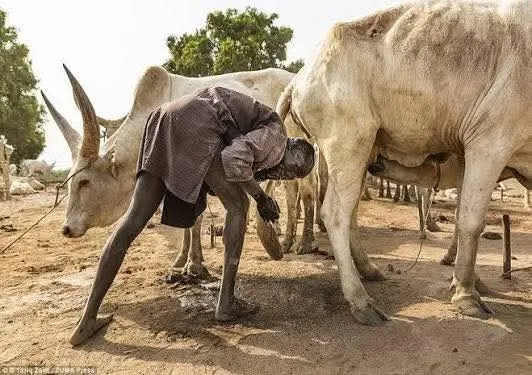
Some Mundari cattle-camp practices have attracted international attention, particularly the use of ash and cattle urine in traditional grooming and personal care.
Ash and skin care: Ash from burned cattle dung is used in some traditional practices, including applications to the skin and hair. Its uses and meanings may vary between individuals and camps.
Washing hair with cattle urine: A distinctive practice associated with some Mundari cattle camps is the use of cattle urine to wash or treat the hair. This practice has been described in connection with traditional hair care and the reddish or orange tones sometimes seen in people’s hair.
The practice reflects a cultural relationship with cattle that extends into everyday grooming. It should be understood within its cultural context rather than treated simply as an unusual spectacle.
These customs are not necessarily followed by everyone, and individual practices may differ. Visitors should ask knowledgeable local guides for explanations and always approach cultural traditions with respect.
6. The Mundari People and Their Environment
The Mundari homeland is closely connected to the White Nile and the grasslands of Central Equatorial. Rainfall, flooding, grazing conditions and water availability influence pastoral life and the management of cattle.
Traditional knowledge helps herders respond to seasonal changes and identify suitable areas for their animals. At the same time, changing environmental conditions and pressure on natural resources can create challenges for pastoral livelihoods.
A visit to the region offers more than cultural discovery. It also provides an opportunity to understand the close relationship between people, livestock and the natural environment.
7. What Makes a Mundari Cultural Visit Special?
For international travelers, visiting a Mundari cattle camp offers a distinctive way to learn about South Sudan’s cultural heritage.
A guided experience from Juba may include:
- A journey through the countryside towards the Terekeka area.
- An introduction to Mundari history and pastoral traditions.
- Time to observe cattle and daily camp activities, with permission.
- Opportunities for respectful photography.
- Conversations with local community members, where available.
Every visit is different. Activities depend on the season, community arrangements and the daily needs of the camp. Visitors should not expect ceremonies or particular encounters to be arranged on demand.
9. Planning Your Mundari Cultural Tour from Juba
The Terekeka area, north of Juba, can be visited on a cultural excursion throughout the year, thanks to improved infrastructure and access. As with any journey, actual travel plans should still take account of current security advice, road conditions and community arrangements.
Improved infrastructure has made it easier for travelers to plan visits to Mundari communities at different times of the year. This means a Mundari cultural experience does not need to be limited to one particular season, although the activities visitors see may vary with local conditions and the daily needs of each cattle camp.
Before travelling, arrange suitable transport, a knowledgeable local guide and any required permissions. Confirm current security advice, road conditions, community access and applicable permits.
Bring comfortable clothing, walking shoes, drinking water, sun protection and a camera or phone for photography when permission is granted.
A local tour operator can help coordinate the practical arrangements and provide cultural interpretation, making the experience more informative and organized.
10. Discover the Mundari People with Juba Tours
At Juba Tours, we aim to introduce visitors to South Sudan through meaningful cultural experiences and locally informed travel.
Our Mundari cultural excursions can be arranged throughout the year, supported by improved infrastructure, and can include transport from Juba, local guiding, community visits and opportunities to learn about cattle traditions and pastoral life.
Specific itineraries, prices, permits and inclusions are confirmed for each booking, subject to community consent and prevailing travel conditions.
We invite travelers to explore South Sudan with curiosity, respect and an open mind.
Conclusion: More Than Cattle, a Living Cultural Heritage
The Mundari people offer a remarkable introduction to South Sudan’s cultural diversity. Their relationship with cattle, traditional grooming practices, community life and connection to the land reveal a heritage that cannot be understood through photographs alone.
A visit to a Mundari cattle camp is an opportunity to listen, learn and appreciate the people behind the traditions.
Discover the Mundari people of South Sudan where cattle, culture, community and the landscape come together in a remarkable living heritage experience.
Plan Your Mundari Cultural Experience with Juba Tours
Interested in visiting the Mundari cattle camps from Juba? Contact us to discuss your preferred dates and travel arrangements.
- Generaltoursjuba@gmail.com
- Phone and WhatsApp+211 925 933 363