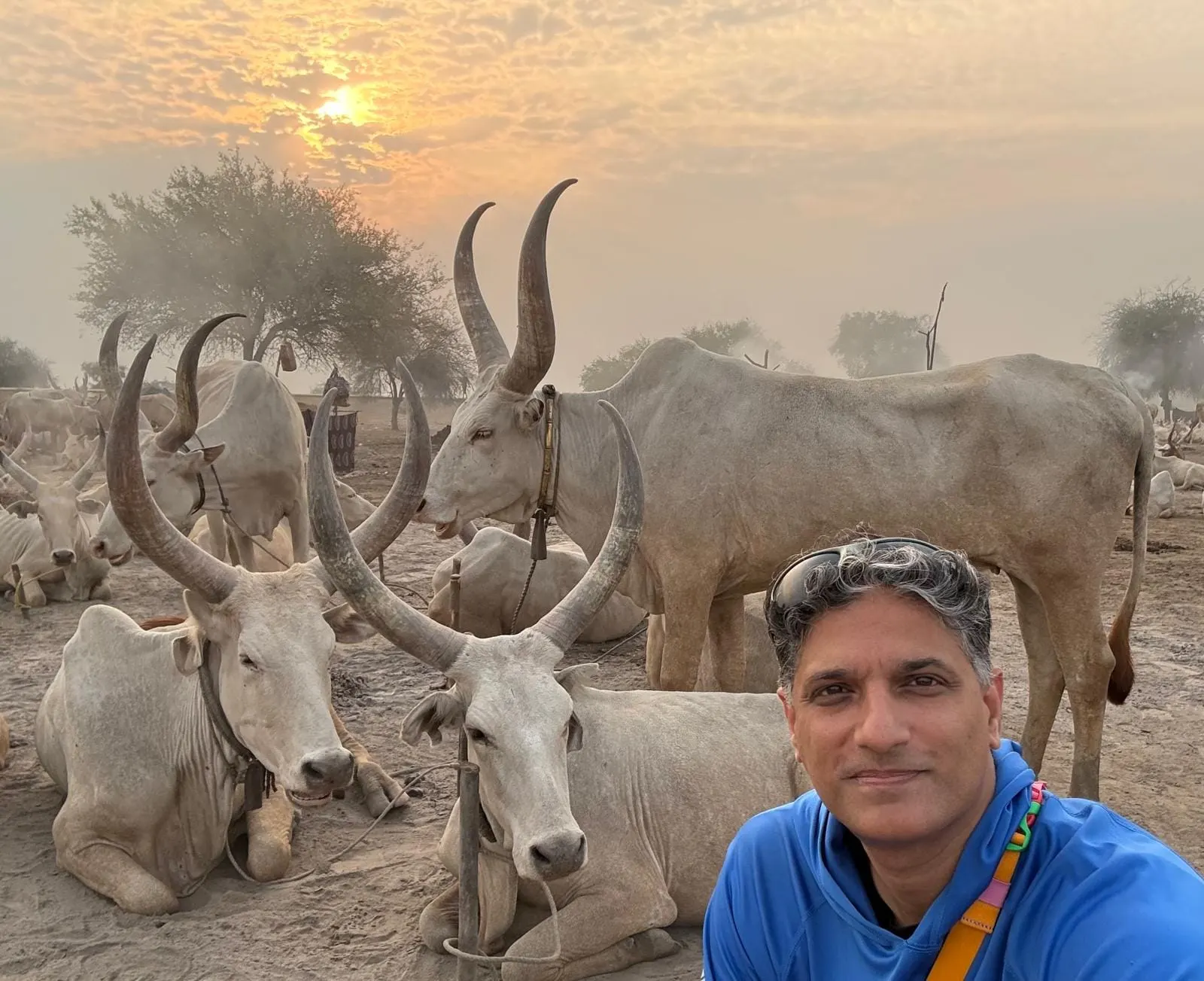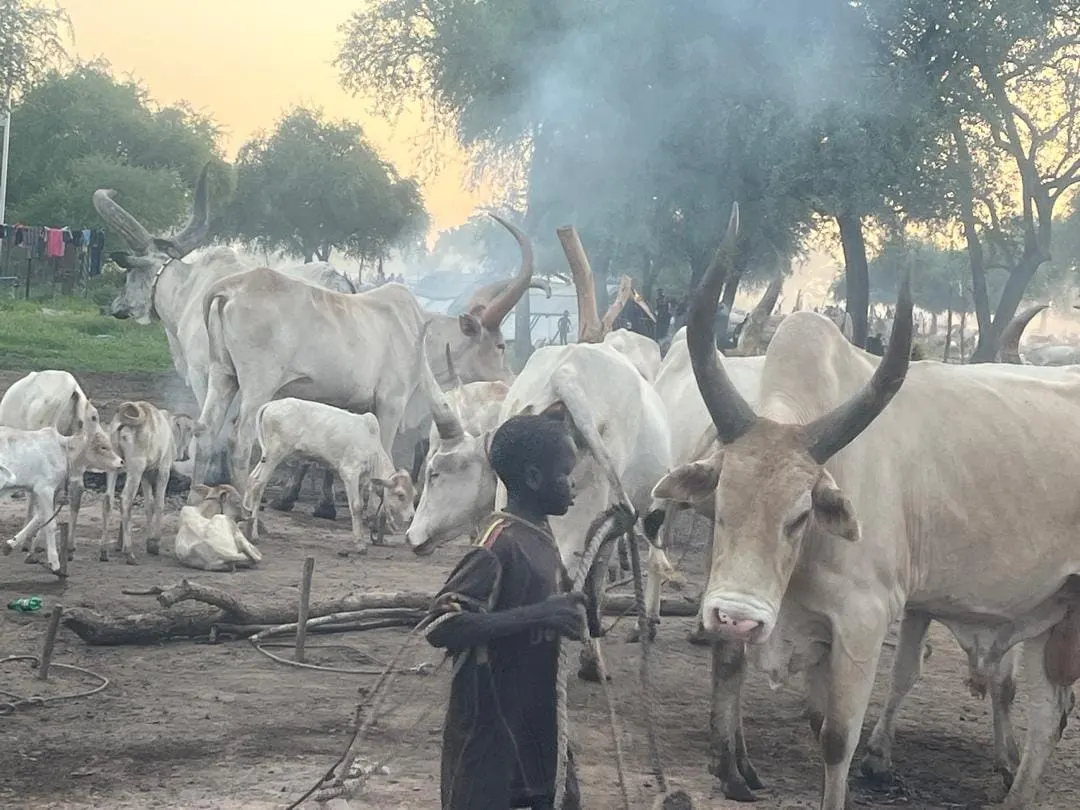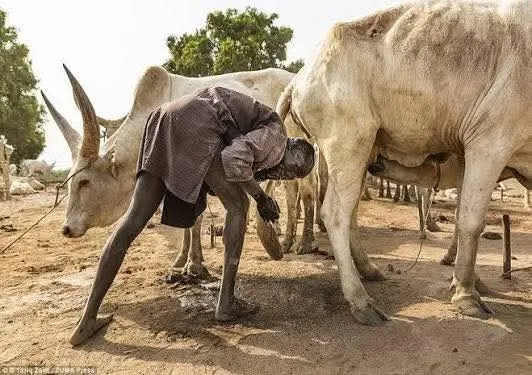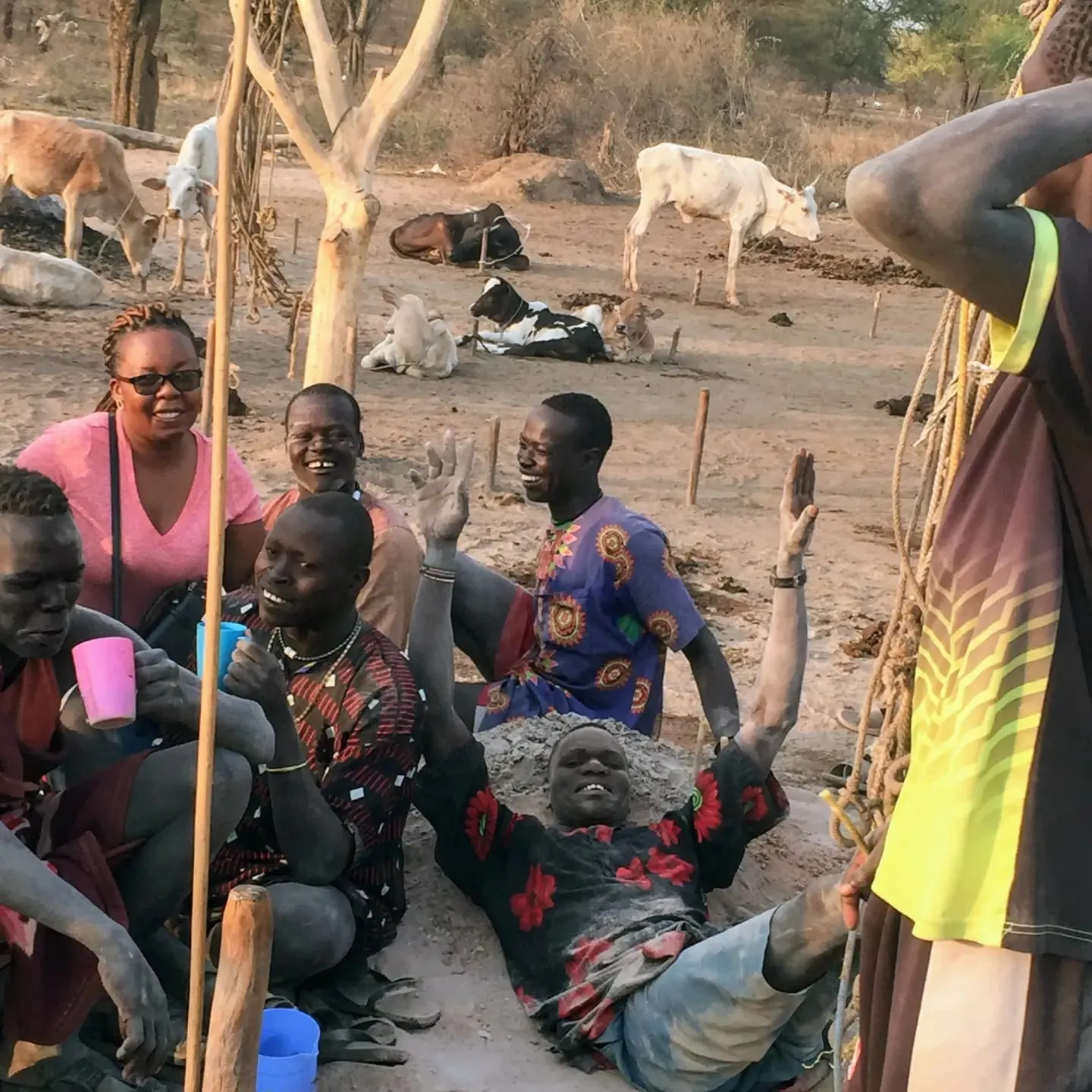
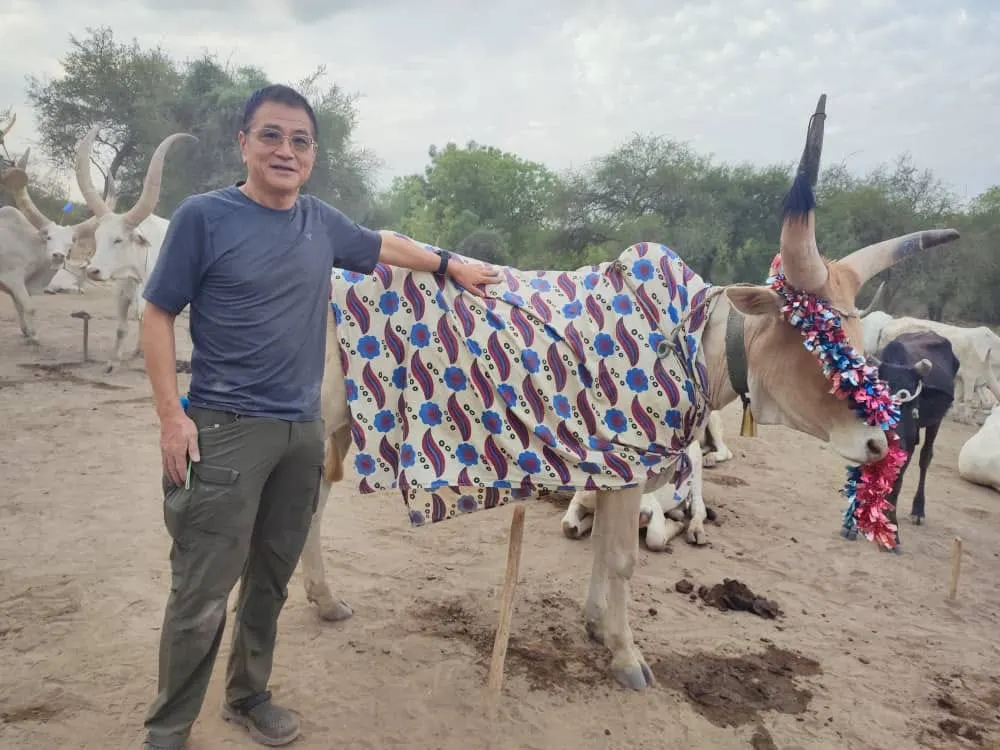
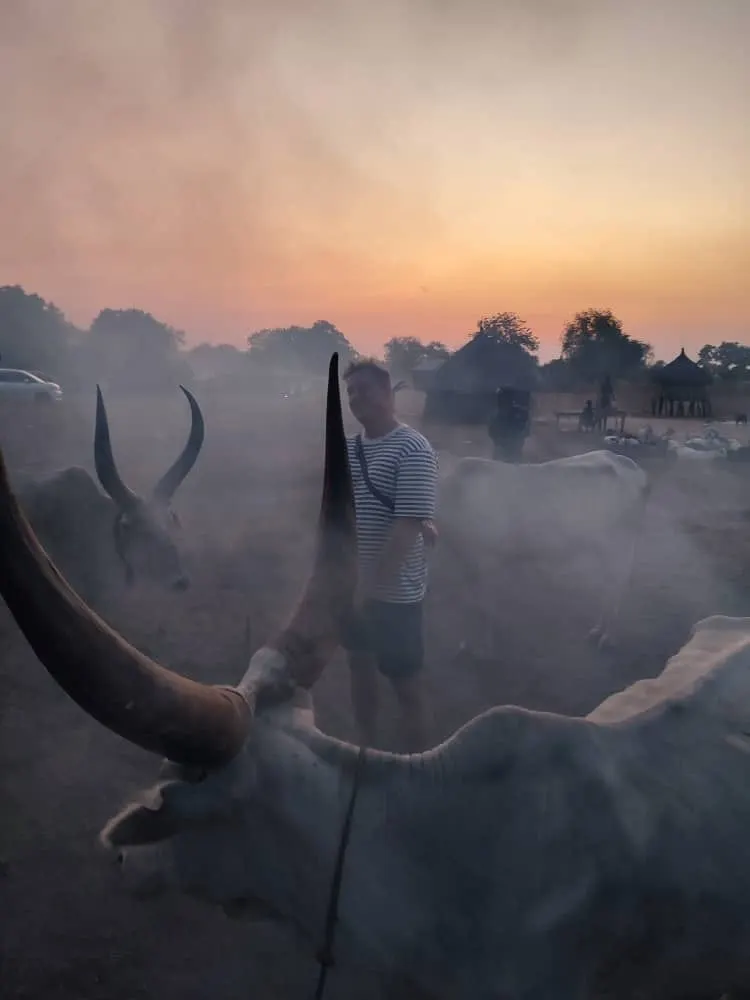
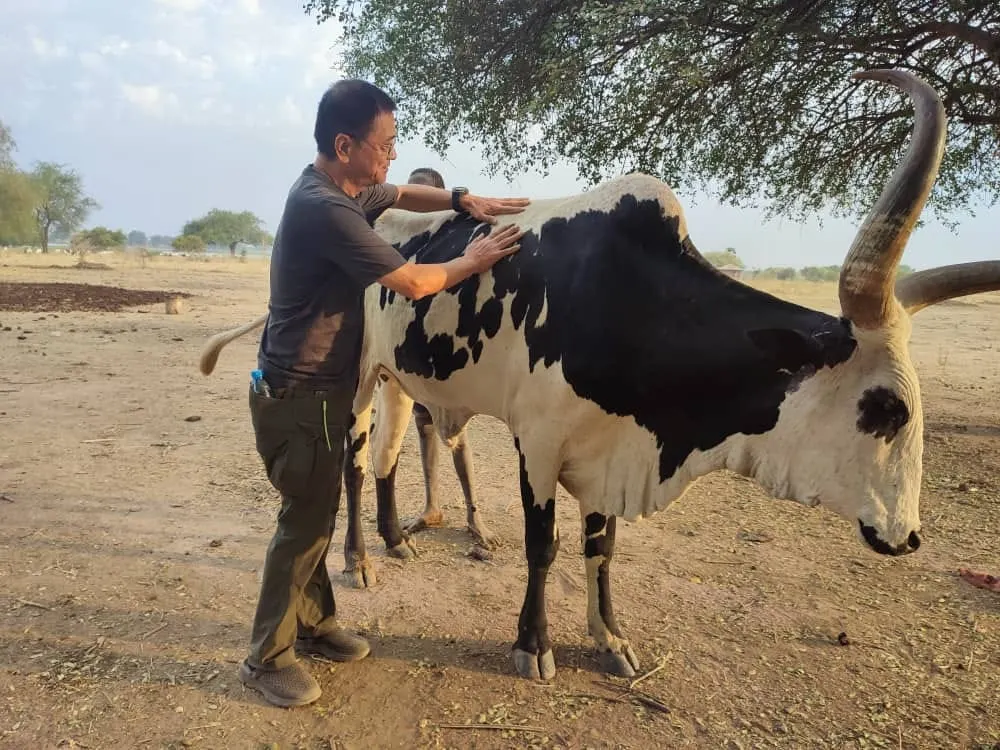
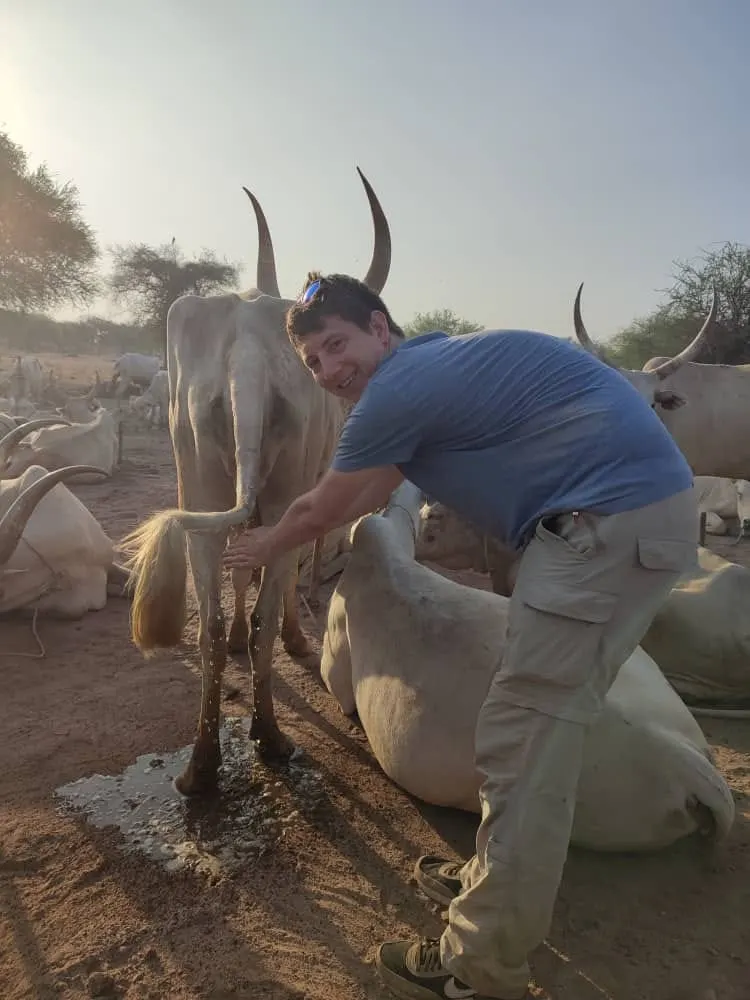
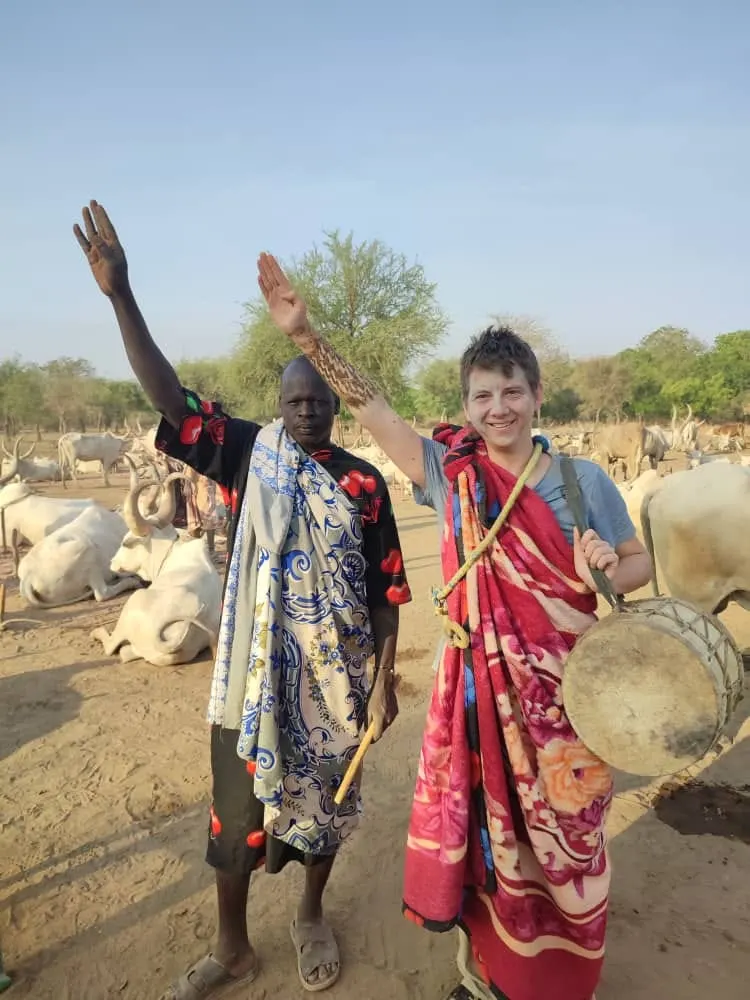
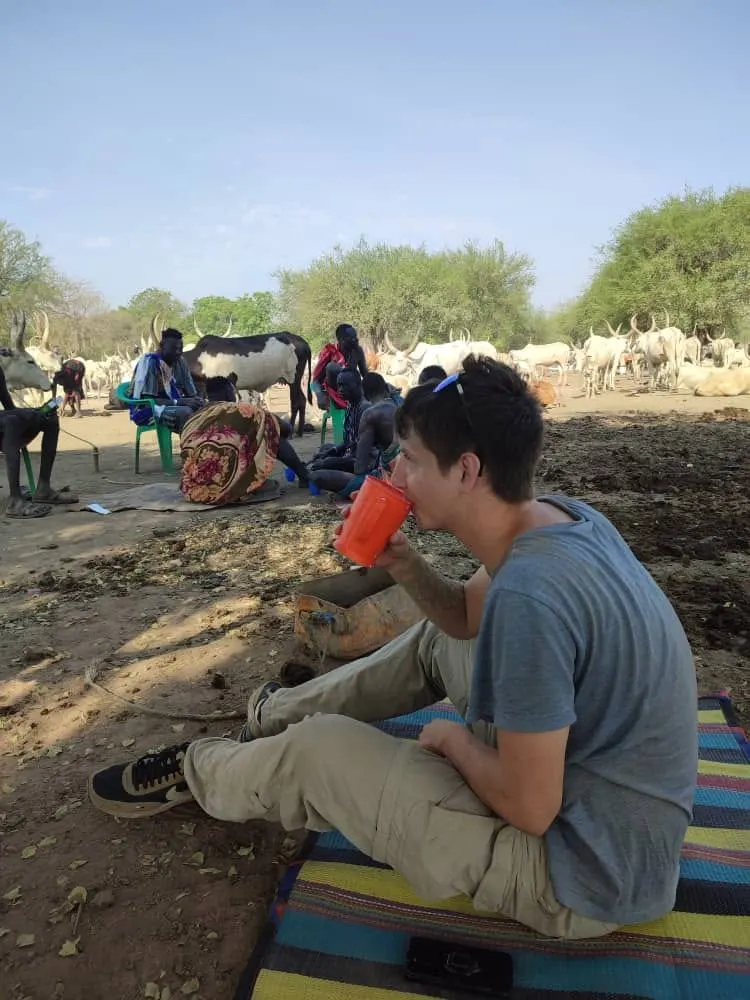
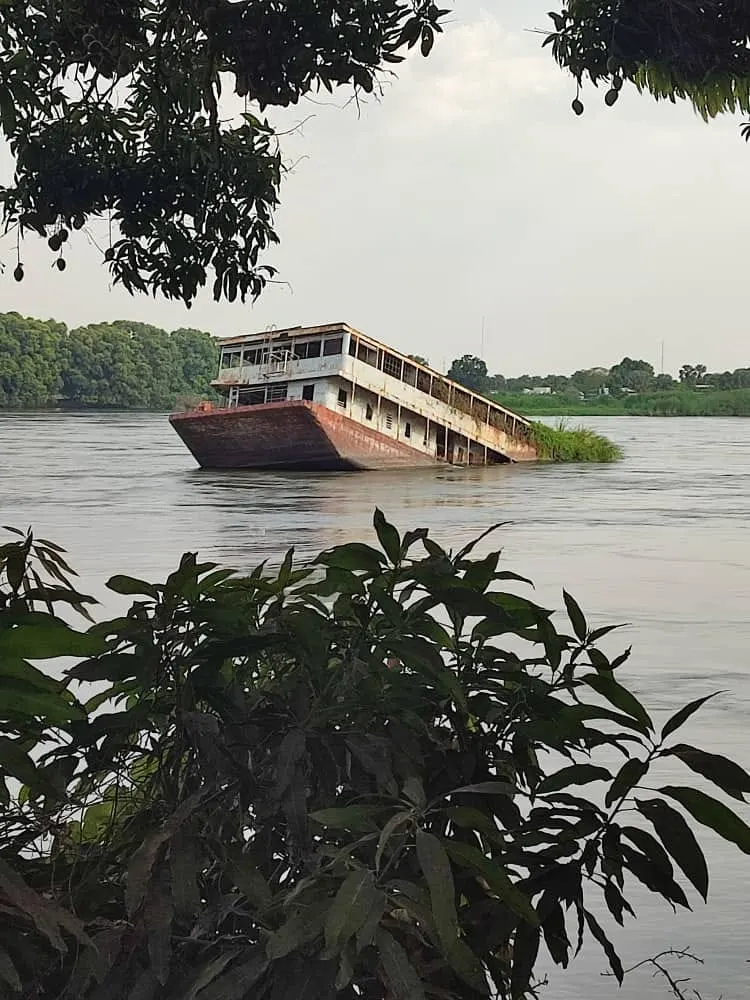
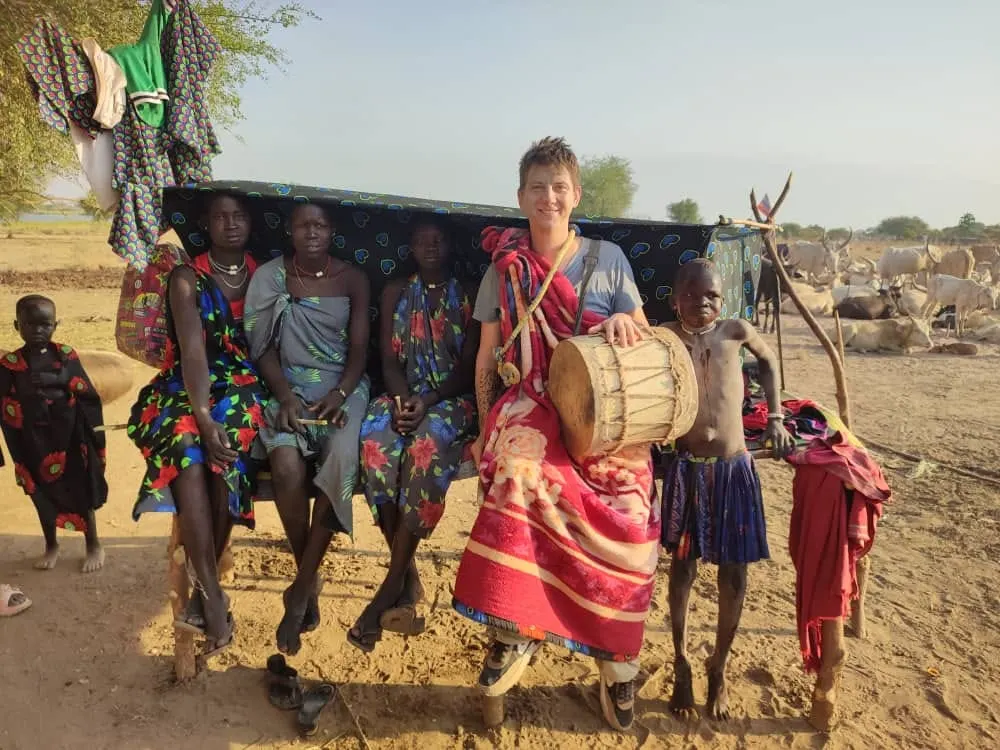
Your journey begins in Juba, the capital of South Sudan, where a guide meets you at the airport and takes you to your hotel. Juba is South Sudan’s capital. A city tour can include the River Nile, Kator Catholic Church, the John Garang Mausoleum and Konyokonyo Market. From Juba you head north to Terekeka, home of the Mundari, a Nilotic people living along the west bank of the White Nile. The Mundari live along the west bank of the White Nile south of Juba. The Mundari cattle camp is about two hours from Juba by road. The camps draw photographers eager to capture the authentic culture of the Mundari people, whose wealth is symbolized by their vast herds. The Mundari are known for their large-horned Ankole-Watusi cattle, body decorations and daily rituals of livestock care, including ash rubbing and smoky dung fires that keep flies away from the animals. Early mornings bring milking and the tending of the herd, and the golden light at sunrise and sunset makes for striking photography.
The experience continues with the Dinka, who are among the dominant tribes of South Sudan. The Dinka have developed intricate cattle management systems, and their daily lives revolve around the care and well-being of their herds. Visitors can meet Dinka communities in their villages and cattle camps and learn about their traditions, storytelling and hospitality. Some travelers also witness traditional wrestling and dancing, which many describe as a highlight of the trip. One traveler on a Mundari and Dinka tour went up to Bor and called the wrestling and dancing truly a highlight. Together, the Mundari and Dinka encounters give you a rare look at pastoral cultures where cattle are central to identity, status and daily life. The trip ends back in Juba, with time for a last look at the city before your departure